
7 Things I'd Try Before Paying To Squeeze My Dog's Anal Glands Again
Because the poo is supposed to help do the job naturally.
About this website: I bought and tried every product I write about with my own dogs, and nobody paid me to feature them. Some links here are affiliate links, so if you buy anything through my site I may earn a small commission at no extra cost to you — it never changes what I recommend.
I used to think anal-gland problems were simple.
Dog scoots. Glands are full. Someone expresses them. Done.
Then I started reading stories from owners whose dogs were getting expressed every few weeks, leaking on the sofa, smelling fishy again after grooming, or still licking their bum even after vet visits.
That is when I realised the better question is not always:
Sometimes it is:
"Why are they not emptying naturally when my dog poos?"
Here are the things I would check before jumping straight back into another expression appointment.
Track stool form, not just scooting
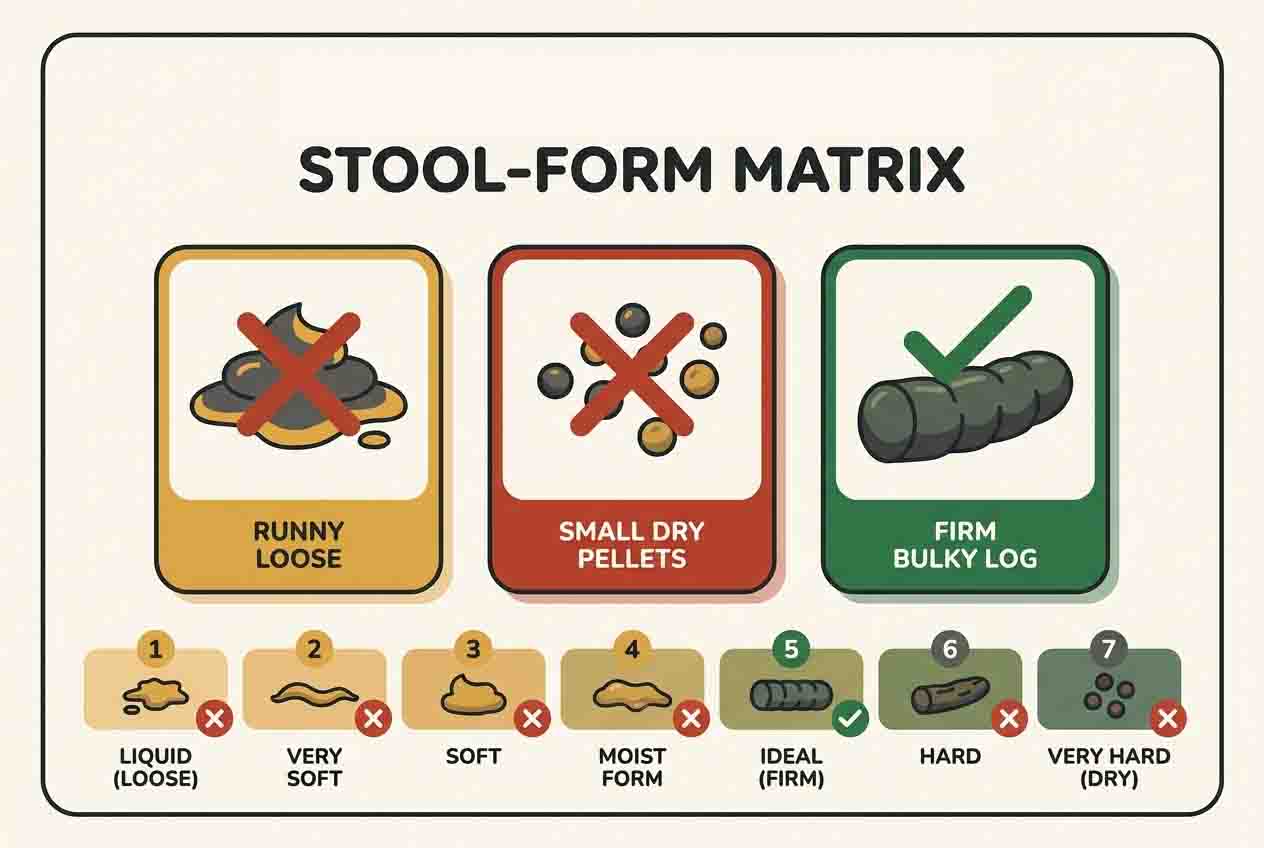
Scooting is the symptom you notice. Stool form may be the clue you are missing.
A firm, bulky poo helps press the anal glands as it passes. That natural pressure can help them empty during toilet time.
So for a week, I would track:
- Are the poos firm or soft?
- Are they bulky enough?
- Are they easy to pick up?
- Are they changing day to day?
- Does scooting happen after softer poos?
- Does the fishy smell show up when stool is inconsistent?
You are looking for patterns, not perfection. If the poo is not doing the work, the glands may keep needing help.
Add stool-bulking support carefully
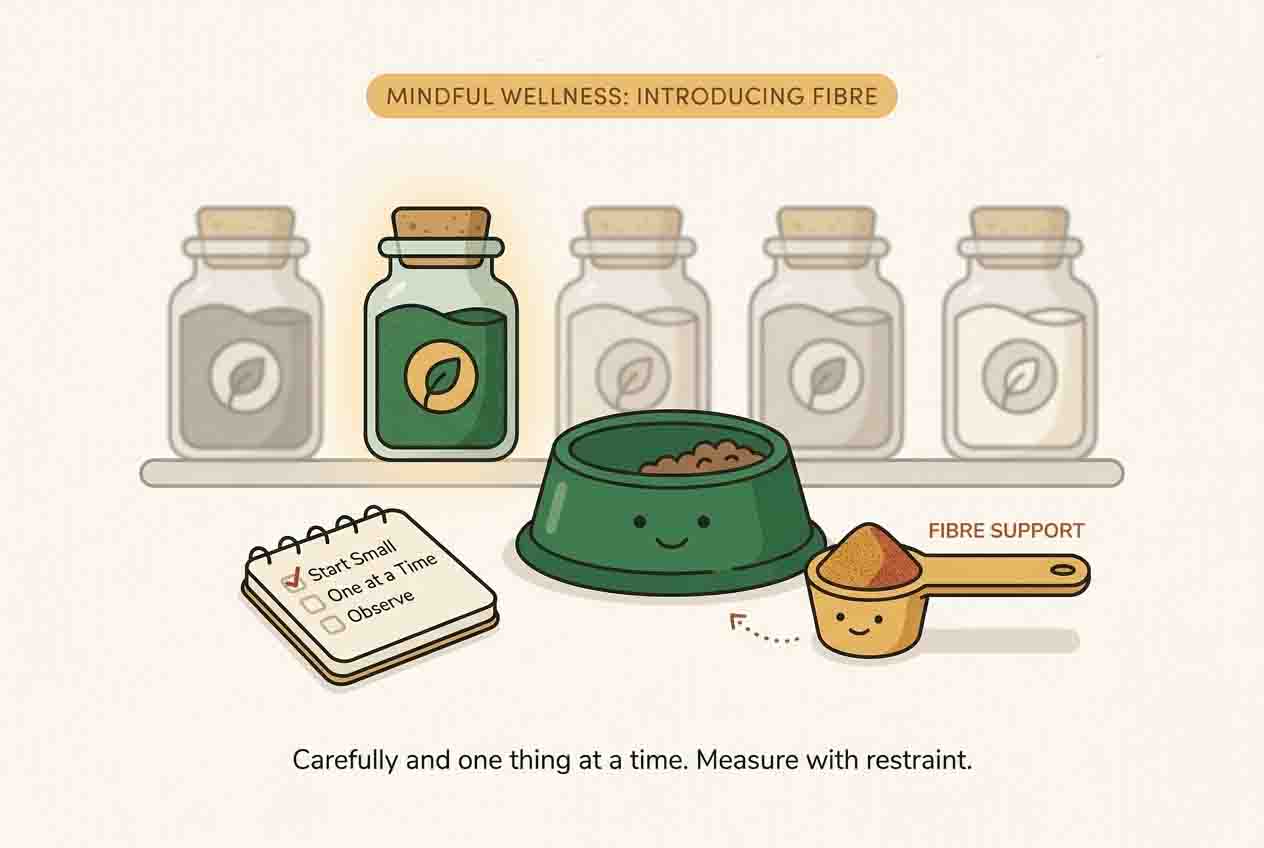
There is a reason dog owners talk about pumpkin, psyllium and fibre. Stool bulk matters.
If the poo is too soft or small, a bit more fibre may help create better natural pressure.
But I would not throw five things in at once. That makes it impossible to know what helped, what irritated your dog, and what made no difference.
Support the full gut system: enzymes + probiotics + prebiotics
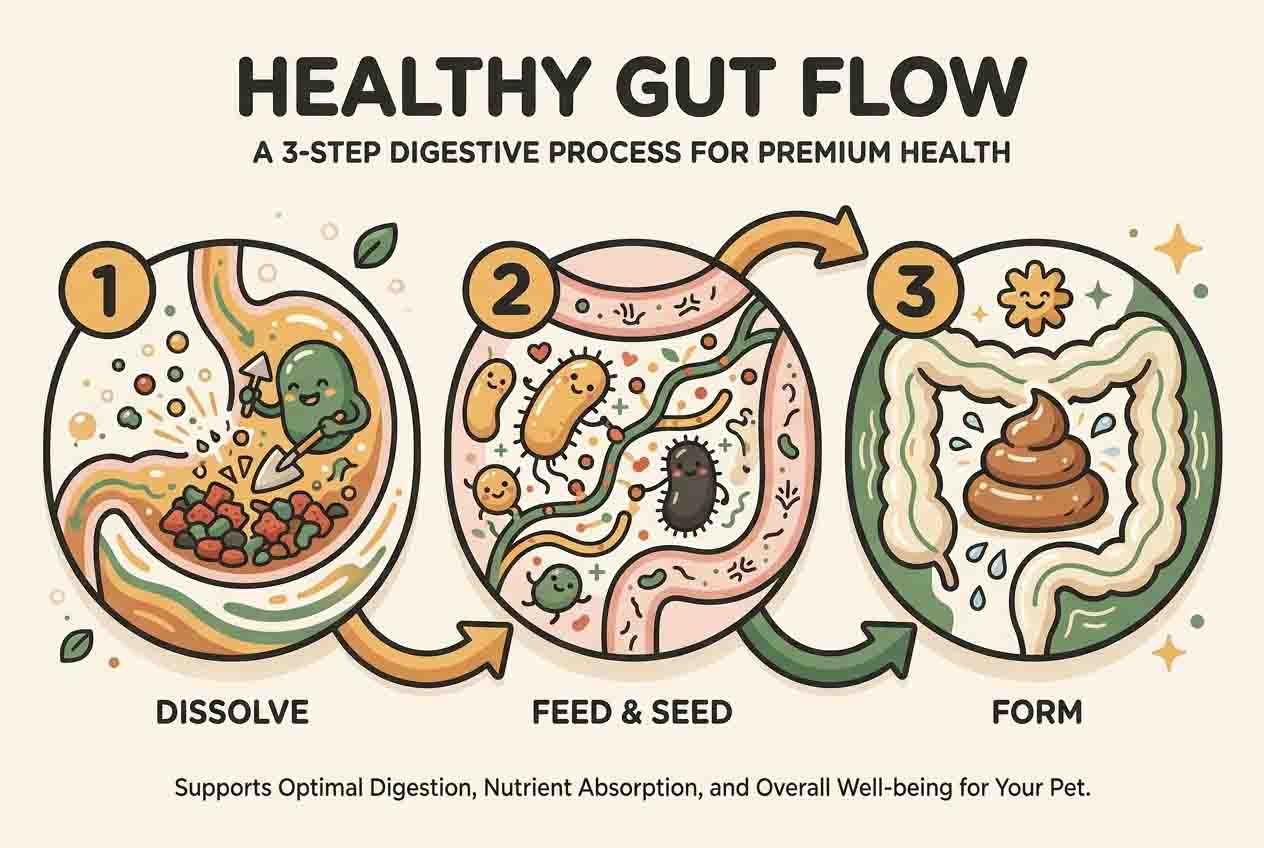
This is where BetterBlend makes sense. Anal-gland support is not only about adding fibre.
The stool has to be formed by a digestive system that is actually working well. BetterBlend supports that system in three steps:
Digestive enzymes help dissolve food into usable pieces, improving nutrient absorption and leaving less poorly-digested residue lower down.
Prebiotics feed good bacteria. Probiotics help support a healthier gut balance.
A better-supported gut and fibre structure help create firmer, bulkier poos — the kind that can press the glands naturally.
That is why BetterBlend feels like a smarter daily trial than guessing with random powders. It supports the poo that should be doing the work.
Try BetterBlend →Keep daily movement boringly consistent
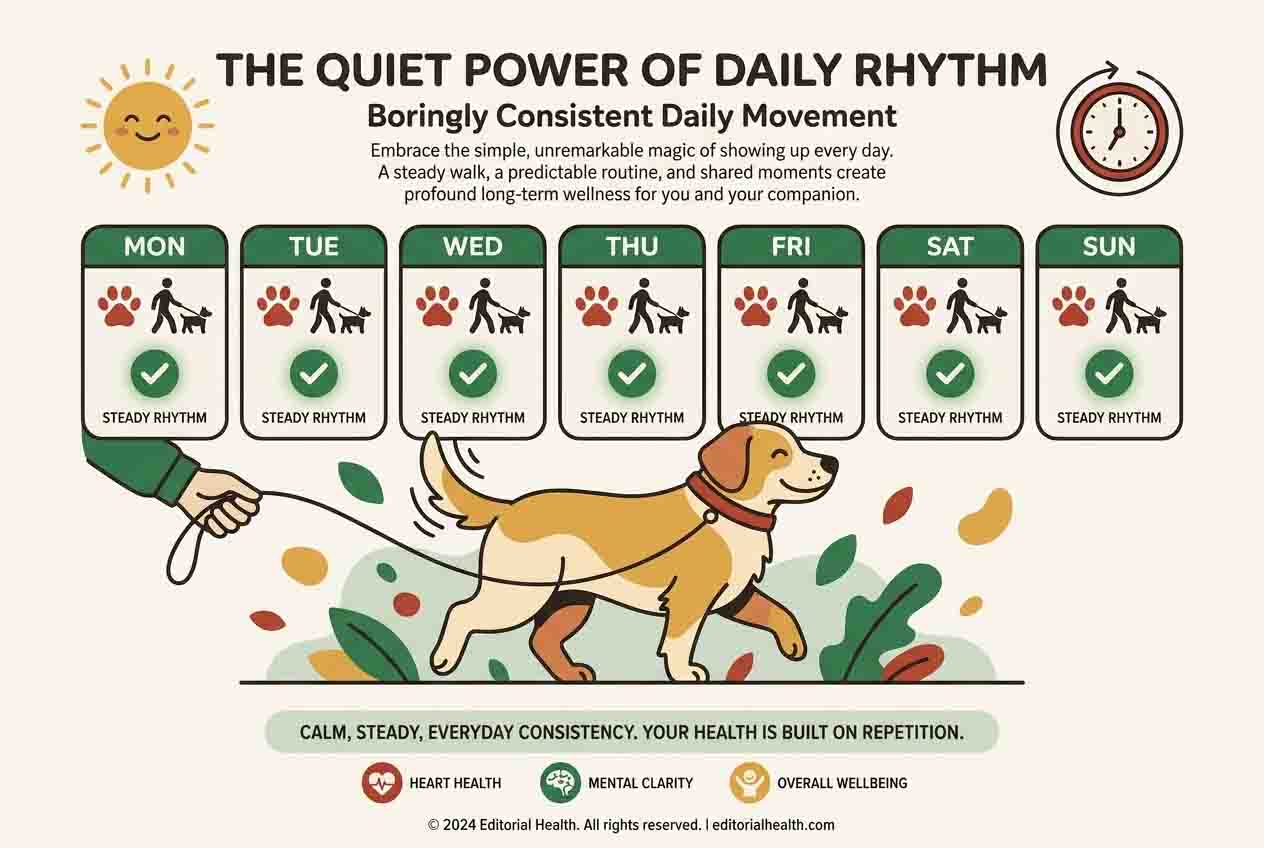
Movement helps digestion. It also helps you notice patterns.
If walks suddenly get shorter, routines change, or your dog is less active, their digestion and stool rhythm can shift too.
This does not mean a walk magically fixes anal glands. But for dogs stuck in the scoot-smell cycle, the boring basics matter:
- daily movement
- steady feeding routine
- enough water
- consistent supplement trial
- fewer random treat/food changes
The goal is to make the gut's job easier, not more chaotic.
Watch allergy and skin signs around the bum
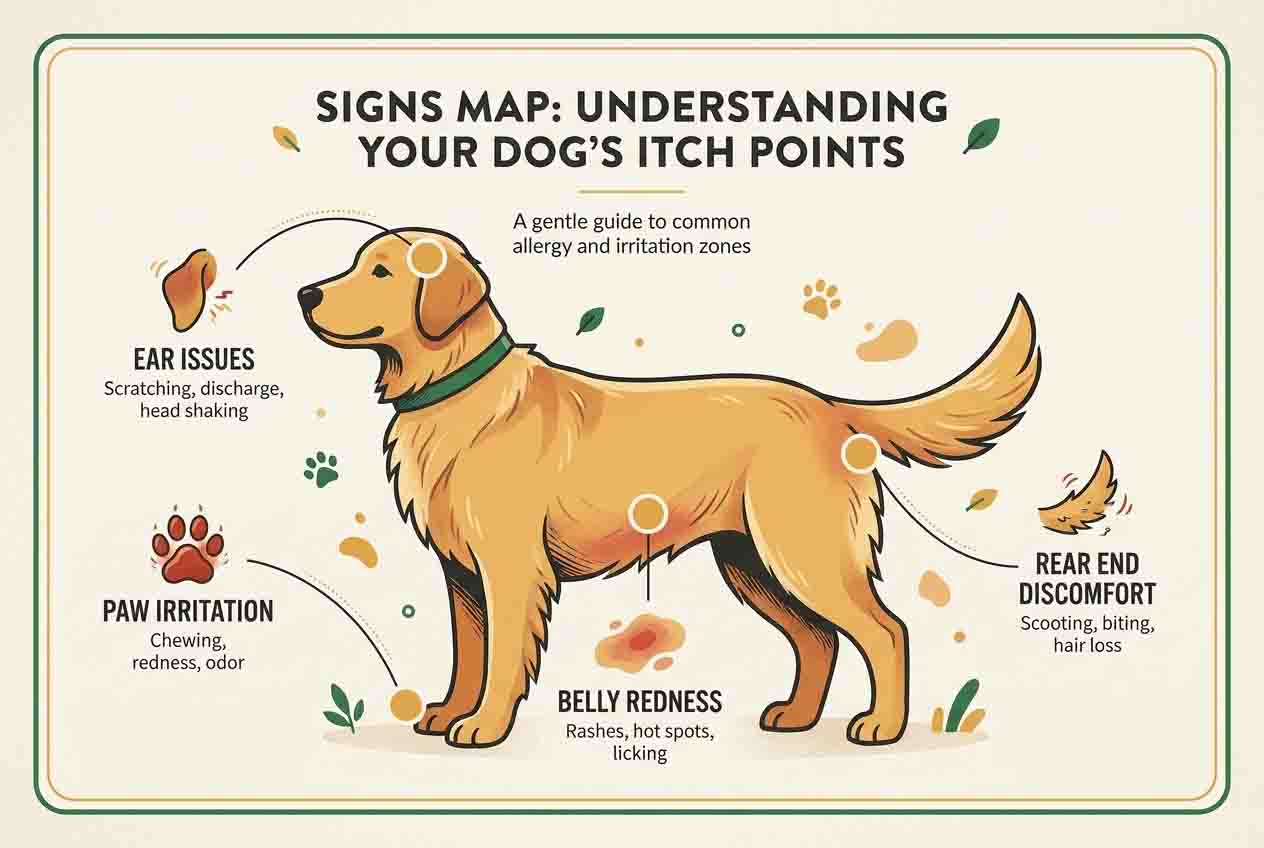
Not every bum-licking dog has the same issue.
Sometimes owners are told "anal glands," but the dog also has itchy skin, paws, ears, redness, allergies, or yeast smell. That matters because irritation can make licking worse, and licking can make everything look like a gland problem.
Signs to note:
- paw licking
- gunky ears
- itchy belly
- red skin
- grass eating
- yeasty smell
- sensitive stomach
- bum chewing even after expression
This is where the gut connection becomes more interesting. A dog with scooting plus other recurring "something's off" signs may need daily microbiome support, not just another expression.
Know when expression or vet care is necessary
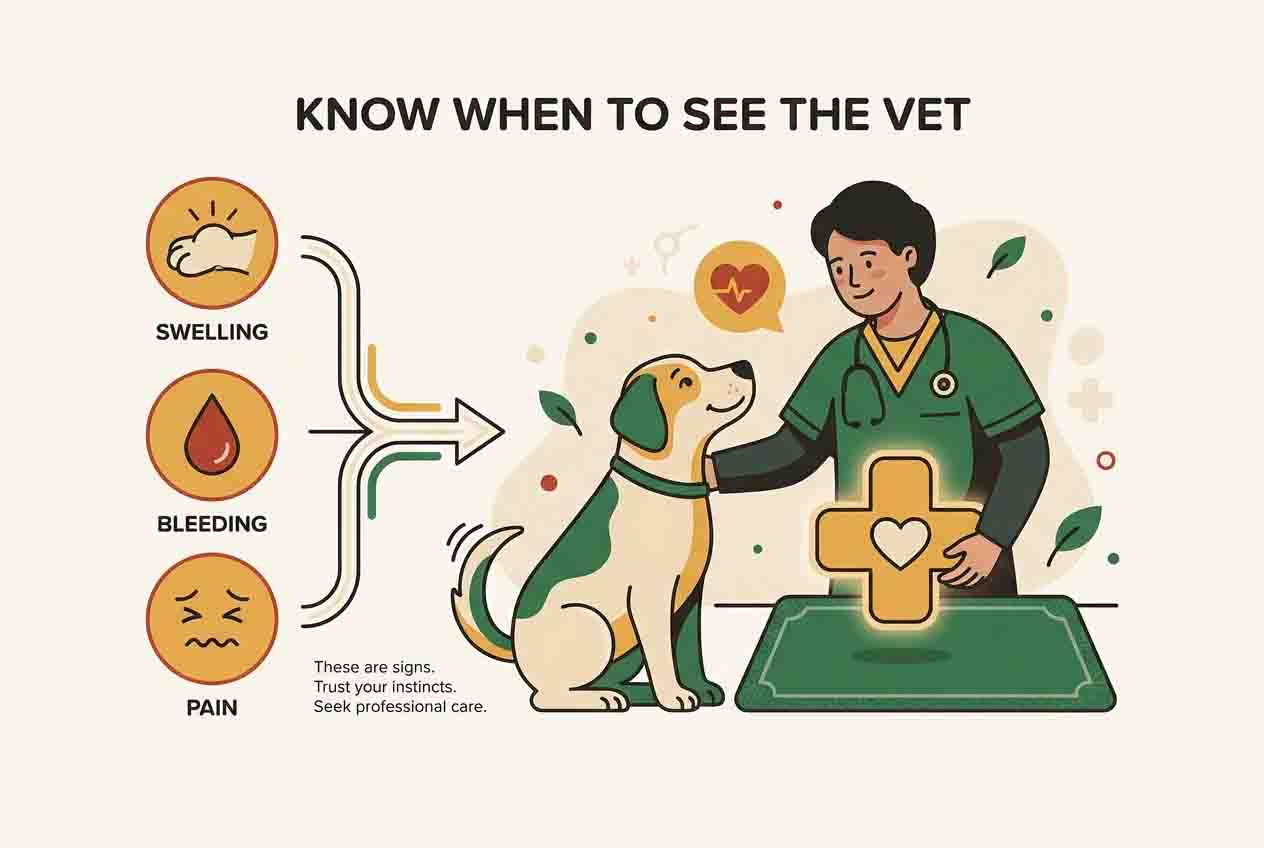
I would not try to supplement my way through obvious pain. Ask your vet if your dog has:
- swelling around the bum
- blood or pus
- crying when pooing
- repeated infections
- sudden severe scooting or pain
- abscess history
- changes in appetite, energy or behaviour
Run a clean 30–90 day BetterBlend trial
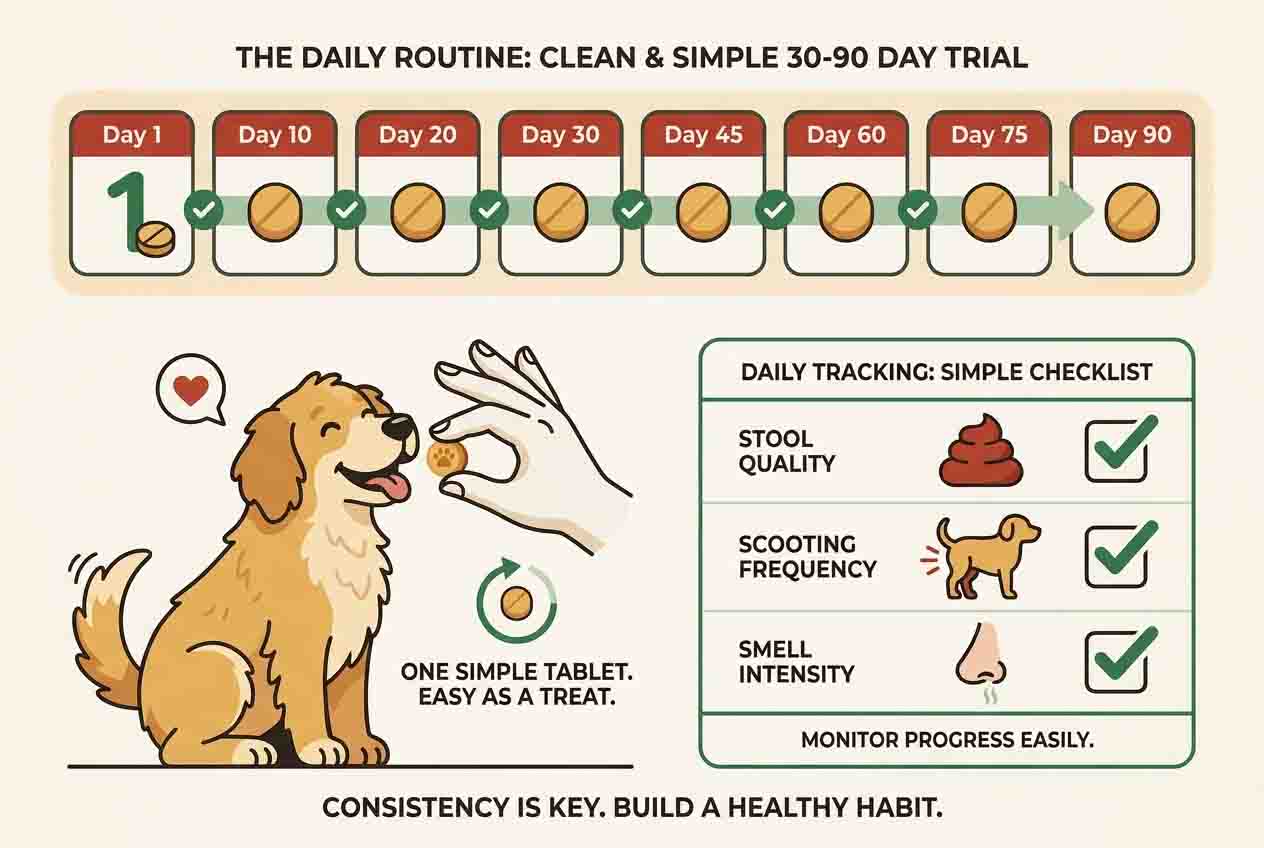
If your dog is otherwise well, but stuck in the recurring scoot / fishy-smell / expression loop, I would run one clean daily trial. Not ten new things. One routine.
BetterBlend is simple because it is a daily tablet. You can give it like a treat, hide it in food, or crush it in with the free pill crusher. During the trial, watch:
- stool firmness
- stool size / bulk
- fishy smell frequency
- scooting frequency
- bum licking
- time between expression visits
- general gut / skin / ear signs
Give it 30–90 days unless symptoms are getting worse. If it helps, you have a routine. If it does not feel worth it, BetterBlend has a 90-day money-back guarantee.
Soft poo vs formed poo
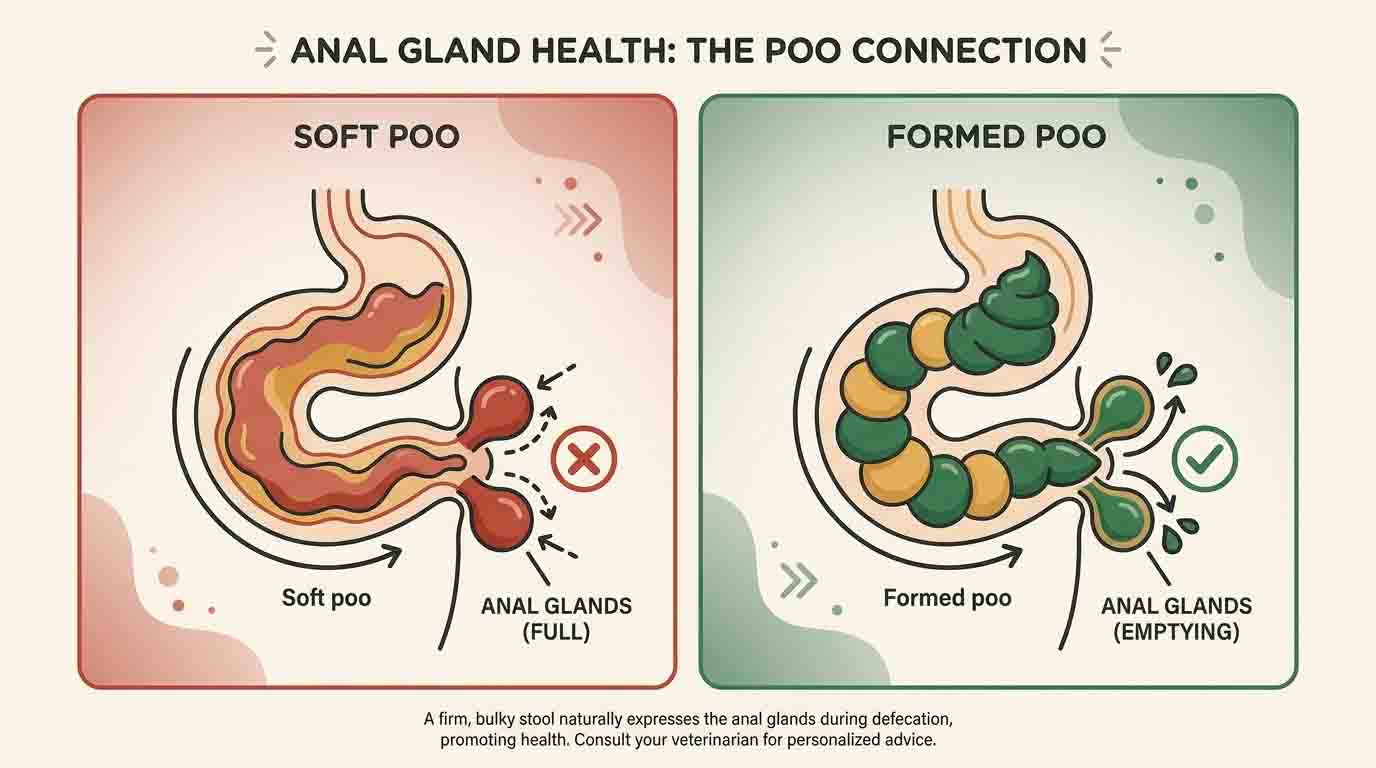
Slides past without enough natural pressure.
Result: glands may stay fuller, leading to scooting, leaking or smell.
Presses gently as it passes.
Result: glands have a better chance of emptying naturally.
This is why stool support matters so much. You are not trying to mask the smell — you are trying to support the poo that should help prevent the build-up.
The shorter BetterBlend mechanism
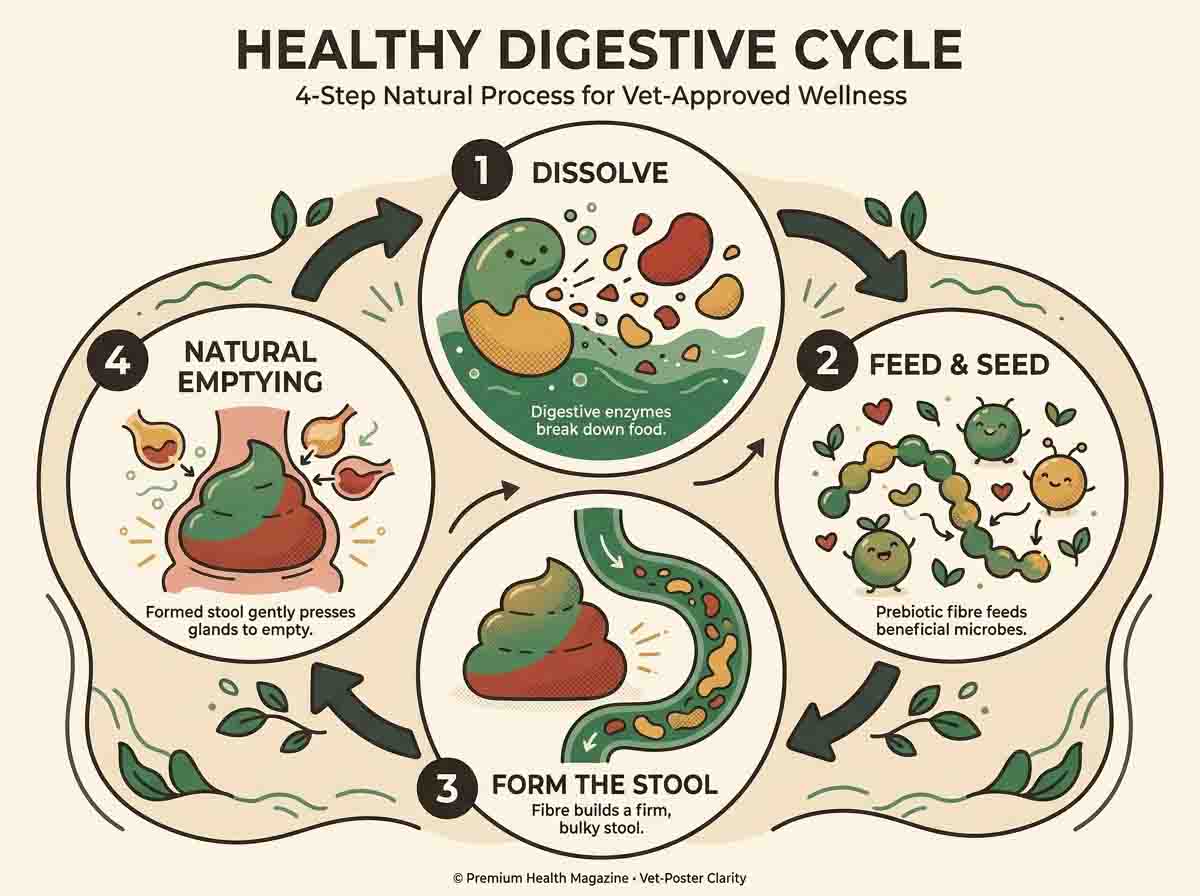
That is the daily system BetterBlend supports.
Final thought
Before you pay to squeeze the glands again, look at the poo that should be helping them empty.
If your dog's stools are soft, inconsistent, small, or the scooting keeps returning after expression, daily gut and stool support is a logical next step.
BetterBlend gives you the cleaner trial:
- enzymes for digestion and nutrient absorption
- probiotics for gut balance
- prebiotics / fibre for stool support
- simple daily tablet
- 90-day guarantee
Start with the poo that should be doing the work.
Get 50% off your first order using my link 👇
Try BetterBlend® Microbiome Support